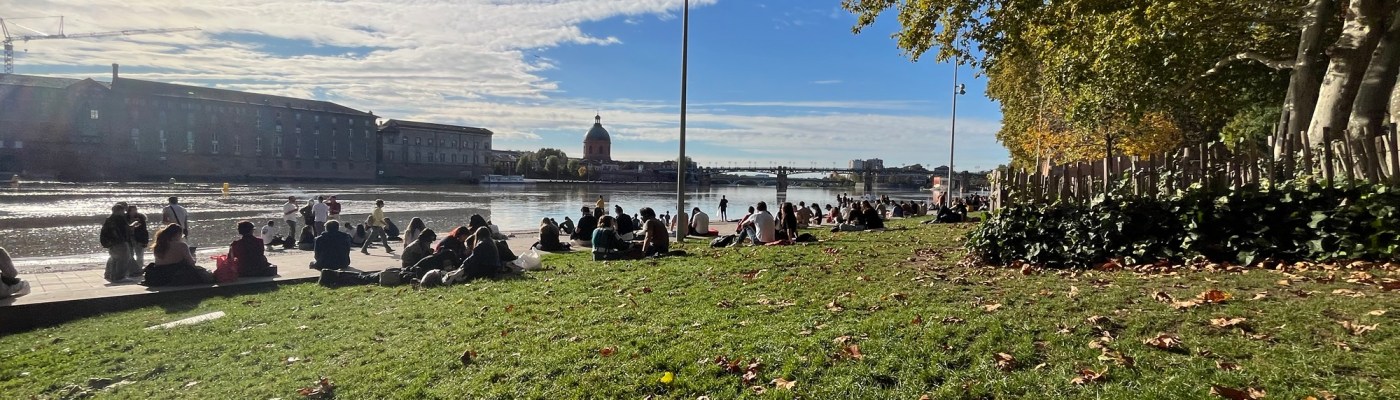
The main picture is to show that the sun has returned to Toulouse and life is as vibrant as usual. The picture is at the Port du Durade which is a waterfront park on the banks of the river Garonne. Today started cloudy and then changed to beautiful sunshine which I think it brought everyone out in the city to celebrate the end of 30 hours of rain. The river was still high but the flooding along the river had subsided and you could walk and sit on the banks of the river again.
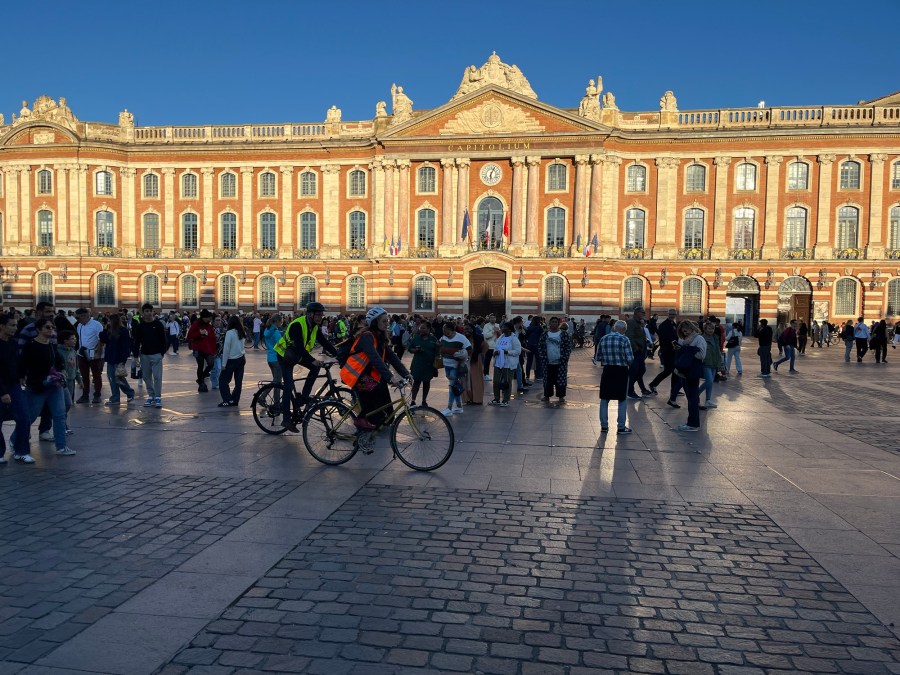
I had signed up for the Marché Victor Hugo tour with Taste of Toulouse (www.tastesoftoulouse.com). Ally was the tour guide and she was very knowledgeable, fun and entertaining. The tour was composed of two sisters (Una and Mary-Irish) celebrating birthdays, a couple (John and Clare-English) celebrating Clare’s birthday, friends celebrating retirement and doing a yoga and cooking retreat near Toulouse (Mary and Nancy-Canadian), two single women, one who was here for a concert (Valentina-English by way of Russia) and one who was just visiting Toulouse for the weekend (Tara-English). It was a very fun group and all were outgoing and interested in the tour so it was great to share discussions about what we were all doing in Toulouse and other stories of our lives. Mary, one of the Canadians was born in Washington, DC so that was an interesting coincidence.
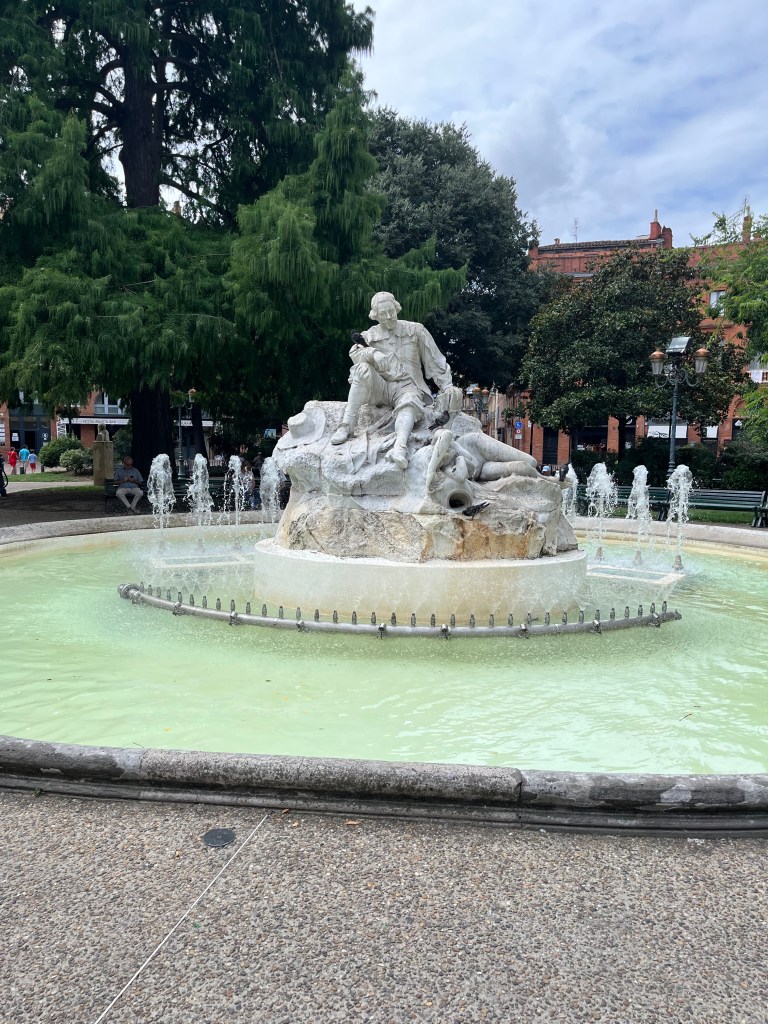
Ally started out telling us a little about the history of the Marché Victor Hugo and it answered one of the questions I had and my friend Tom had about whether there was a Victor Hugo connection in Toulouse as the market is named after him and there is a statue of him in a park. Tom was reading Les Miserable when we were traveling this summer to the Baltics and I had sent him a picture of the Victor Hugo statue when I visited this summer. Ally informed us that there are more than 2000 streets named after Victor Hugo in France. She said we should compare it to Martin Luther King who has 900 streets named after him in the United States. Think of the size, number of cities and populations between the two countries and you can see the outsize influence Hugo has on France. He was a voice of the people who did not have a voice in France and upheld the values that were/are core to France.
After the brief history lesson, Ally led us into the market and took us to specific stalls that she liked and introduced us to the products and items that each stall sold. Ally knew many of the proprietors of the different stalls and gave us both insight to the food but the nature of the proprietors. One was a charcuterie stand (Maison Garcia) that sold traditional Toulosian sausage which is traditional in this area. It also sold Iberico Ham. They sold the whole legs of ham as well as sliced ham. The whole legs could cost up to 1000 euros or more. The one we tasted was aged for 4 years and I believe she said the most expensive are aged for 65 months. The hams are made by Juan Pedro Domeq, a rich Spaniard, whose goal is to produce the best Iberico ham in the world. There is a strong connection between Toulouse and Spain. It is close to the Spanish border and in medieval times the border would shift between Catalonia and Languedoc. During and after the Spanish Civil War, many of the Republican refugees from Spain settled in Toulouse.
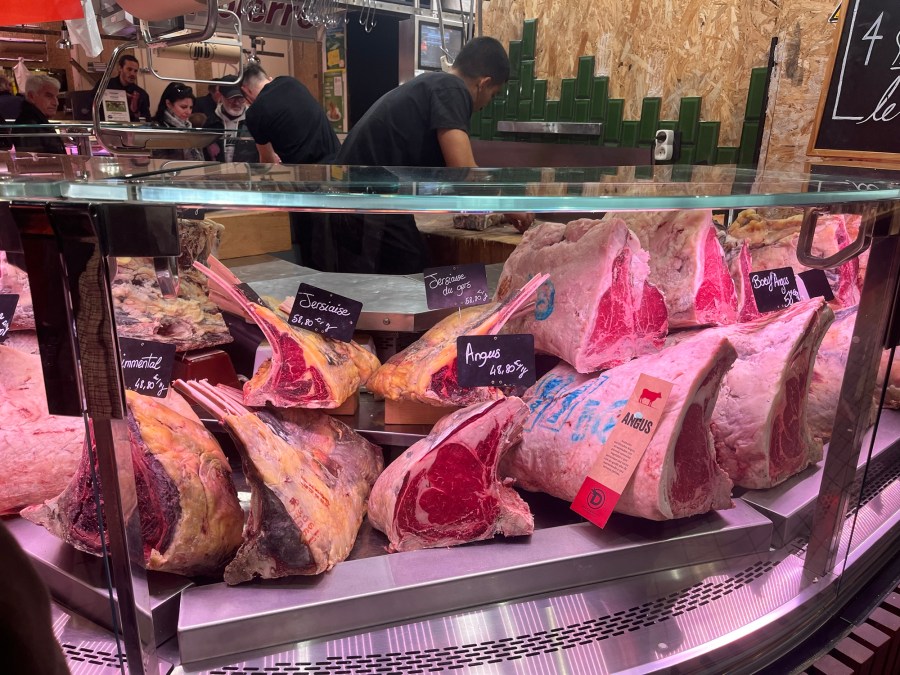
Another interesting stand was a beef stall that sold age dried beef. They will allow customers to order certain portions and they will save it and allow it to age longer until the customer wants it. They will add more as the customer consumes the portion that they want each time they get some from the market. It was interesting as they sold beef from different types of cattle and the marbling and fat was different on each. The Jersey beef had a yellowish fat and that is because it grass raised and feed. The Angus had the more normal whitish fat and that is because it is corn fed. I never knew that much about beef – mainly had Angus and bought in the grocery store.
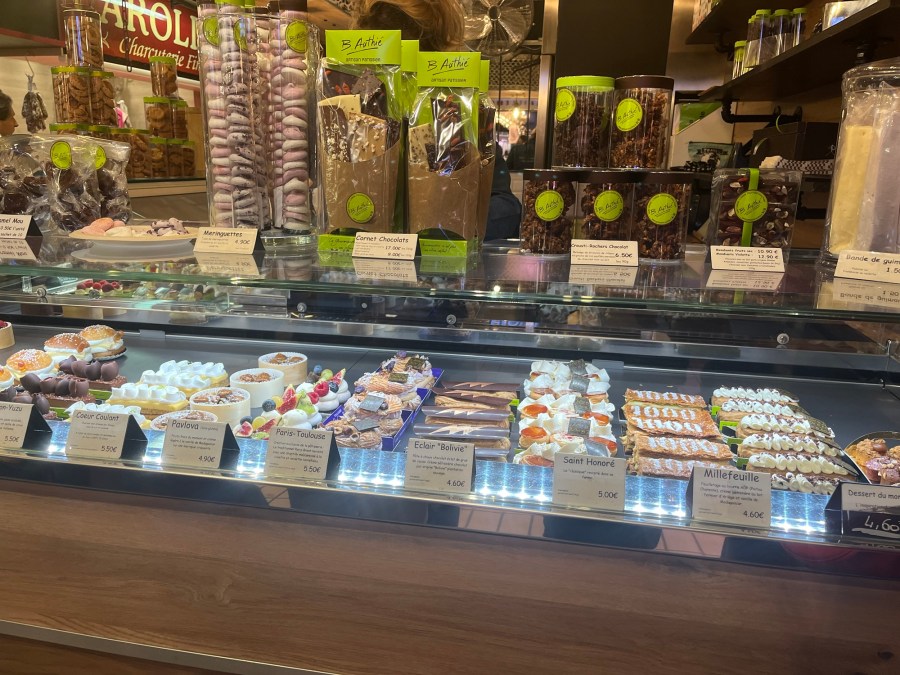
There was a fantastic pâtisserie (Pâtisserie Authie) which I am going to have to shop at very soon. Violet is a flavor that Toulouse is from. Supposedly a soldier brought back a large bunch of violets from Italy and they spread in this area and have become a product for flavoring here. We tried candied violet petals which are used in drinks to add a touch of flavor. Also, had a lovely pastry with violet cream.
Another of my favorites is the seafood stalls that have incredible fresh seafood and many things that you would never be able to find in the United States. All super fresh and many of the shellfish are still very much alive and moving. You can order oysters from the stand and they will shuck them and you can eat them in the market with wine. Nothing like super fresh oysters. That will be one of my lunches in the near future.

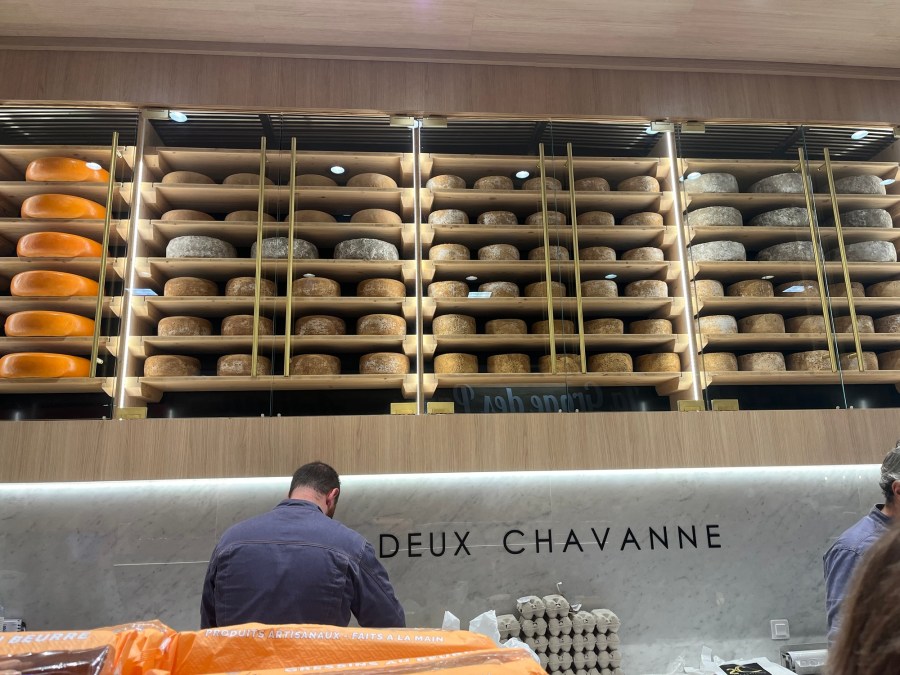
Of course there was la formage! A great cheese monger that has probably 100 or more different cheese and they make the cheese themselves. Ally said one of the cheese is barred from being taken on the Metro because it is too smelly. The cheese is set out in five different categories so you can see the different types that are on offer.
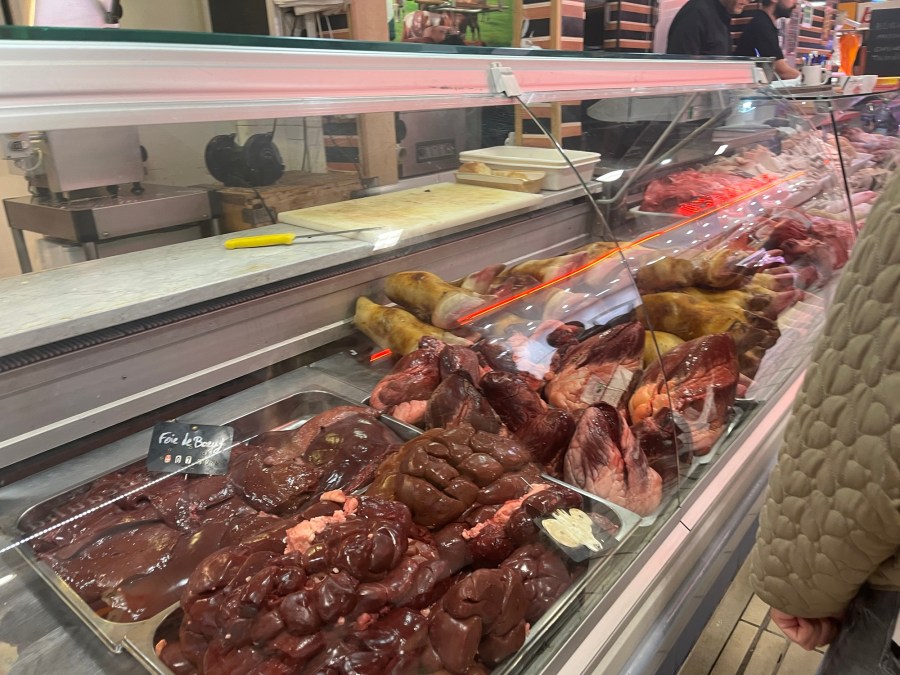
There are things that not many (if any) American would eat or buy. The French are into using the entire animal that is being butchered so there is a stand that is dedicated to offal – hearts, intestines, liver, gizzards, feet, heads, literally the entire animal.
The last but probably most important to the French is the boulangerie for the baguette. There is a “contest” in France of people who make things with their hands – a lot has to do with cooking but it can be any product that is made by your hands Meilluer Ouvrier de France (Best Worker of France). It is held every 4 years and people spend years working to receive the title. It is very hard to achieve and is based on the person. The boulangerie is run by a MOF and the bread showed it. France has a law (as they have for many things) about what can go in a baguette (codified in 1993) and it is flour, water, leaving and salt. Ally showed us what made a good baguette – pointed ends, large cut in the top with sharp edges, blisters on the end and consistent color. The best baguettes cost 1.35 euros. Thousands of baguettes are sold in France every day.
While doing the tour, Ally was buying different things that she had explained and shown us so at the end of the tour, we ate cheese, charcuterie, rillettes, baguettes, and pastries. All this was washed down with a petillant naturel – sparkling wine (Chateau Tour Des Gendre), a Gros Mesang – white wine (Cuvée Marie, Jurancon Sec) and a Fronton (100% Negrette (La Folie Noire d’Ambat 2020, Domaine La Roc). All the wines were good and went well with the food options. Also, there were fresh figs.
All in all the tour was very informative, great food and wine and the best part was Ally and the other people on the tour. It was one of the best days I had had in Toulouse so far.
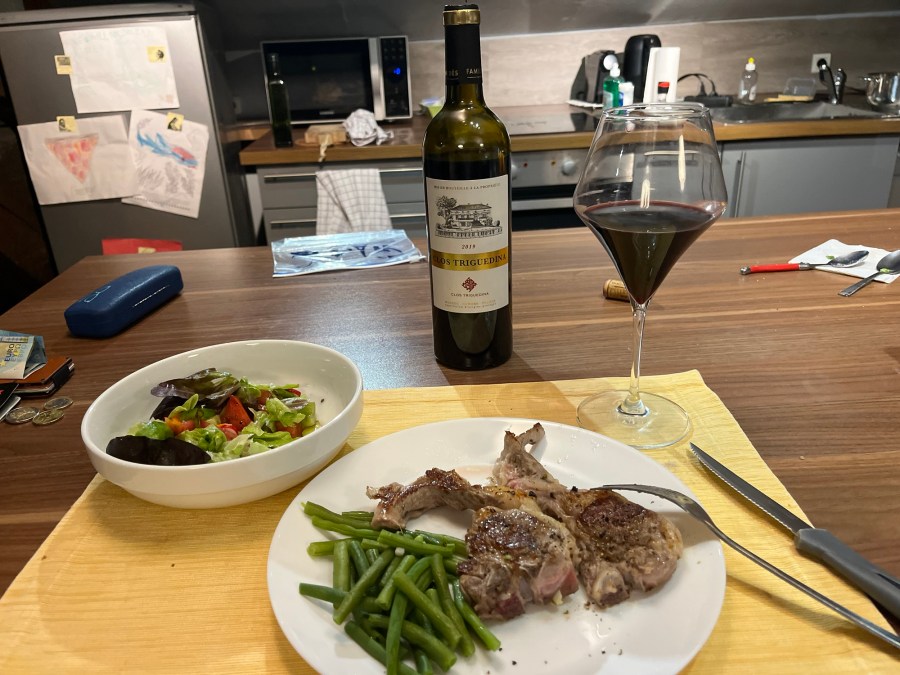
After the tour, I wandered down to the river and sat and read while enjoying the sun and the vibrant nature of Toulouse. I, then, came back to the apartment and cooked dinner with things that I had bought at the morning at the Marché Victor Hugo. I felt almost like a native!. I had bought some wine at Busequets, my go to wine shop, and bought a Cahors Malbec to have with dinner.
I would highly recommend Ally and Taste of Toulouse if you ever visit the city! I am already signed up for their Wine Bar tour and am really looking forward to it.
 Peter's Next Chapter
Peter so so great to meet you! Will continue to live vicariously through your Toulouse adventures until I can return. Bon voyage! 🌻
LikeLike
It was great to meet you as well. If you want to keep it touch, my email is pwb1956@yahoo.com. It was wrong in the email that was sent out but Ally corrected it so I have all the contact information.
LikeLike