I took a wine tour to the Valpolicella region of Veneto (the province Verona is in) which is about 30 miles outside of Verona to the north. It is the most famous region for wine making in the Verona area as it is the home to Valpolicella and Amarone. For Americans, Amarone is probably the best known wine from the region. There are seven wine denominations in the Veneto but only three are really know, Valpolicella, Bardolino and Soave. Bardolino is near Lake Garda which I visited yesterday and drank wine but did not visit wineries. Soave is the dominant white wine of the area.
The tour started in Verona where we were met by our guide, a nice young woman who is a sommelier and does wine tours as an independent contractor. There were five of us on the tour, a couple from Singapore, a woman from London with her mother. They were Persian but mother lived in Germany where the daughter was originally from.
As we drove out the Valpolicella region, the guide gave us an overview of wine production in Valpolicella, a history of the area, information about the grapes used in making Valpolicella and an overview of the whole wine scene. It was an interesting introduction to the wine.
Our first stop was Damoli, a family owned winery that has been in business since the 1600s. One of their wines is 1623 which is the first time they started making wine. Teresa the daughter of the owner met use and gave us a tour of the winery. They have one small vineyard attached to the property but most of the vines are up in the mountains further up the valley at 500 meters above sea level. The vines are grown the Verona style which means that they are grown up high with concrete why shape post to hold the vines. This creates a high canopy which has the leaves above the grape clusters. This is to protect them from the high heat, rain and other climate issues. This is very important because Amarone is made from dried grapes so the clusters when harvested have to be completely intact with no damage to skins or other problems so they can dry correctly.
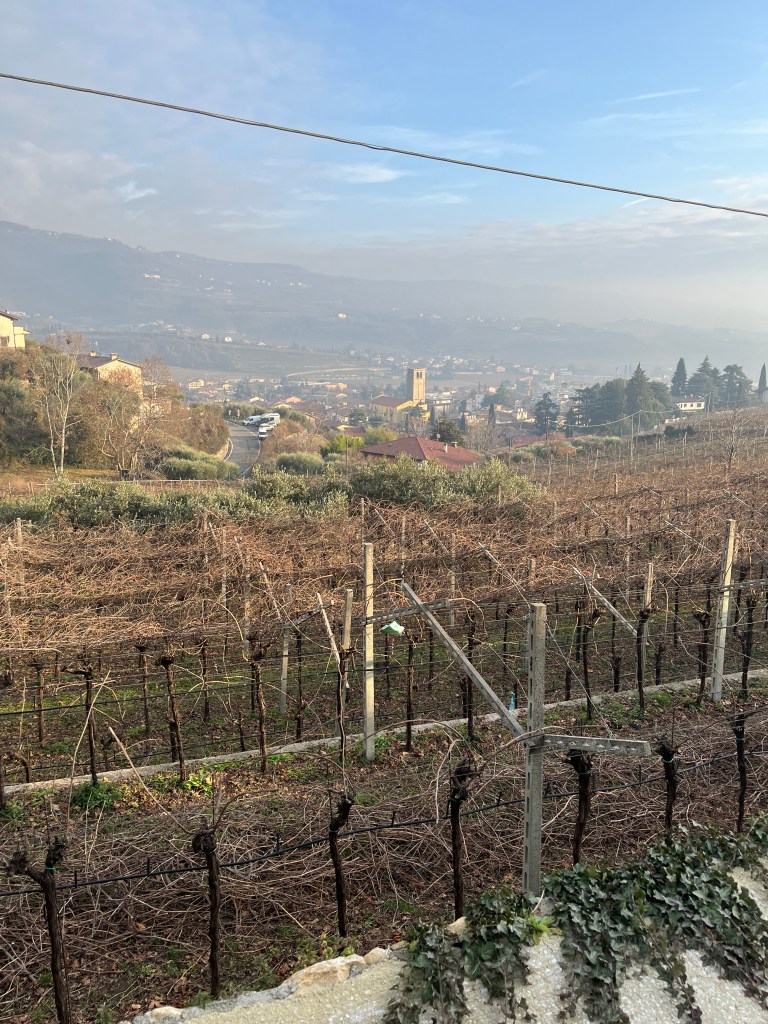
After the discussion of the vines, we saw the room where the wine is held after initial fermentation in stainless steel tanks. The wine is made with natural by commercially made yeast so that the fermentation can be controlled to product the quality of the wine that they want.
For Valpolicella it is a new wine and is not aged, it is generally released with ins 6-7 months of aging in stainless steel. We had the 2022 vintage and it was just released last week. For Valpolicella Superiore, it has higher alcohol content, 1% higher and is aged in the bottle for at least a year.
The second type of Valpolicella is Rispasso. This is made with a double fermentation. The first fermentation happens and it is held for 2-3 months. This is the same time that it takes to dry the grapes for Amarone and ferment the Amarone. After the this period, the Valpolicella is combined with the skins of the wine that make the Amarone. There are 20% Amarone skins to the 90% of the Valpolicella. After a second quick fermentation, 4-7 days, then 10% of fresh Amarone is added. The wine is then put in French barrels to age for 3 years. The French barrels are old barrels and have been used previously to make Valpolicella.
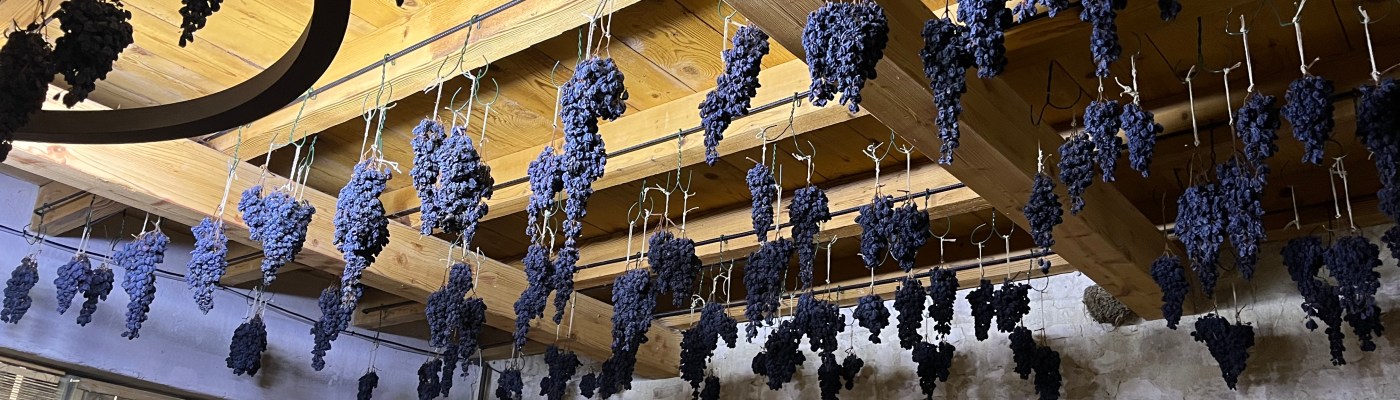
Amarone is made from the best grape bunches in the vineyard – all the grapes are picked by hand. After the grapes are picked, they are dried in a special room using only air (wind). If there is not enough wind naturally to dry the bunches, they have large fans to use as if too much humidity is allowed, mold and other issues can arise. The grapes are dried for 100-120 days. The juice ferments for 30-40 days. The wine is then aged in small French barrels or large Slavonian (Croatia) barrels for four to five years.
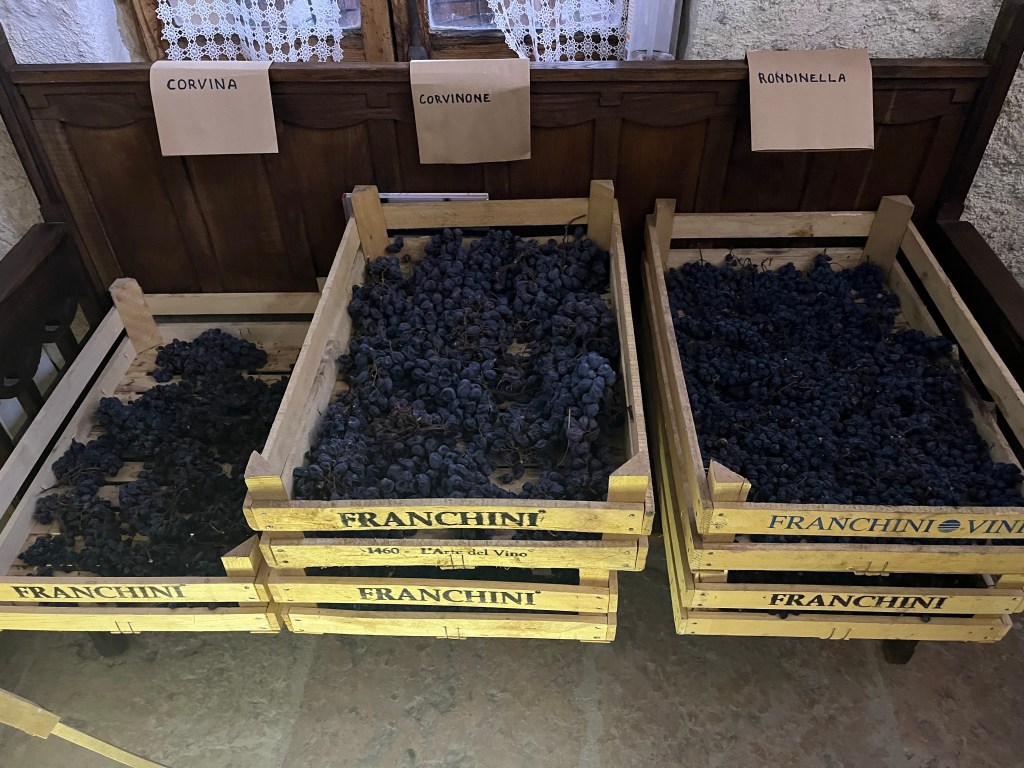
Because of Italian wine regulations, there are lots of checks on the wine to ensure quality and meeting the strict standards. The three grapes that can be used in these wines are Corvino, Covinone, and Rondinella. The regulators come around to the wineries every year and test for acidity, alcohol content and taste. There are sommeliers who tastes every type of wine (especially the Amarone) and only after the test are wineries given the exact number of neck labels need to be certified as Amarone, Valpolicella and Valpolicella Ripasso. Each neck band has a number on it and if one is lost or destroyed, they must report it to the regulators.
Many wineries make wine that is not one of the standards. They are only able to label that a Veneto Rosso. Damoli’s Brigasco is their signature wine. It is made with Amarone and Merlot. They add 10% Merlot to the Amarone. The winemaker likes soft wines and he thinks the Merlot mellows out the Amarone.
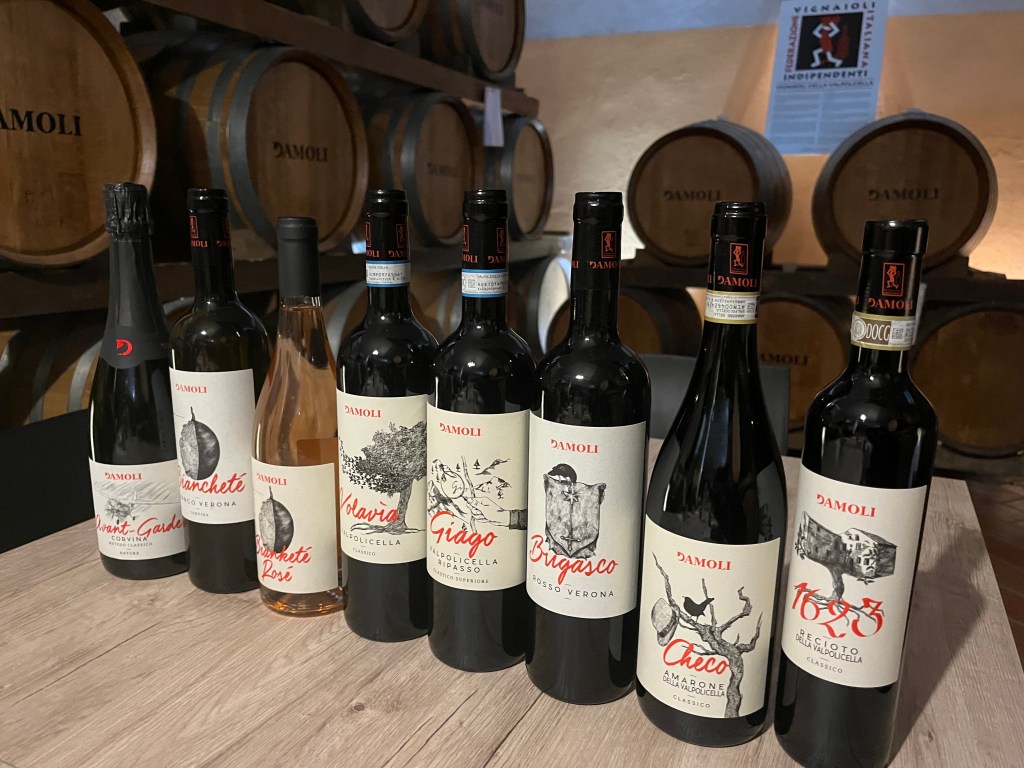
The last wine is Ricioto. It is the first wine that was made in the region prior to understanding fermentation, yeast and the chemistry. It ferments for 20-25 days and then the fermentation stops which means the sweetness stays. It is then aged in barrels for 6-12 months.
We tasted the Valpolicella Classico (can only be made in the western section of the appellation (which the original area and the oldest), Valpolicella Ripasso, the Brigasco, the Amarone and the Ricioto. All were very good. I am not a fan of sweet wines but the Ricioto was reasonable.

They export most of their wine and interestingly the two places that they had distributors are Florida and Oregon. Recently, they have procured a distributor in Nebraska. I was shocked by that but good for them.
The second winery was Franchini, again a family owned winery but in my opinion much more commercial. We got a tour of the vineyard, the barrel room and the ice room. The ice room was a small room built underground. Originally back in the early 1800s when it was built, it was covered with snow in the winter and packed down so it formed ice. It was an early refrigerator. It is now used to story their own reserve wines.
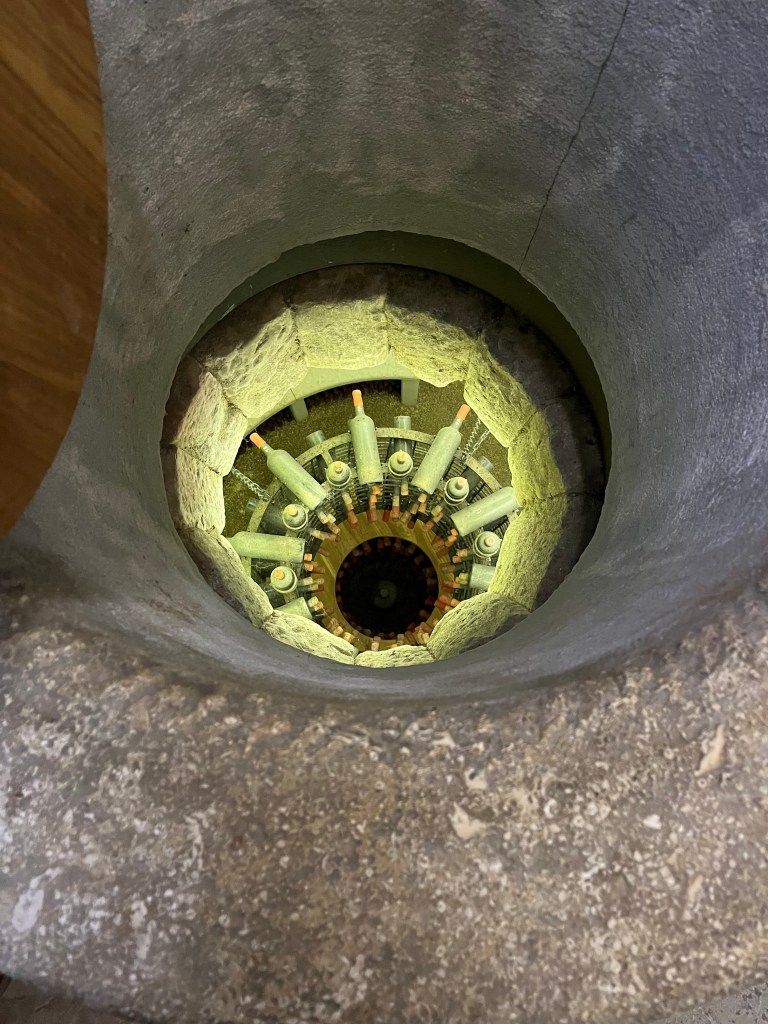
We tasted four wines there – Valpolicella Rispasso Valpolicella Superiore, their house signature wine made with 17 grapes but local and international varietals and the Amarone. All good but I did prefer the Dolmati wines.

They also make their own olive oils and cherry jams. The olive orchards and cherry orchards are grown to provide diversity to the soil and the area to protect the biodiversity of the location.
Two little interesting things. The guide lives about five minutes from where we lived when I grew up here. She asked me where I had lived and I told her and she knew immediately where it was. The next is there was another couple touring the second winery and I heard the man tell the winery person he was from Virginia so I asked where from and it ended up they used to live right across Franklin Street from where I currently live. They now live in Manassas. It is a small world!
Being me, I bought six bottles of wine from each winery and they will ship it home to me. The amazing part is that with the cost of the wine and the shipping, the average bottle price is no higher than I would pay in Alexandria.
It was a fantastic last day in the first part of my next chapter.


Peter, your recall of all the details of these wines is amazing! You’re igniting my desire to return to Verona and follow your footsteps.
LikeLike
So much fun!! I love tours like that where you meet others on the tour.
LikeLike