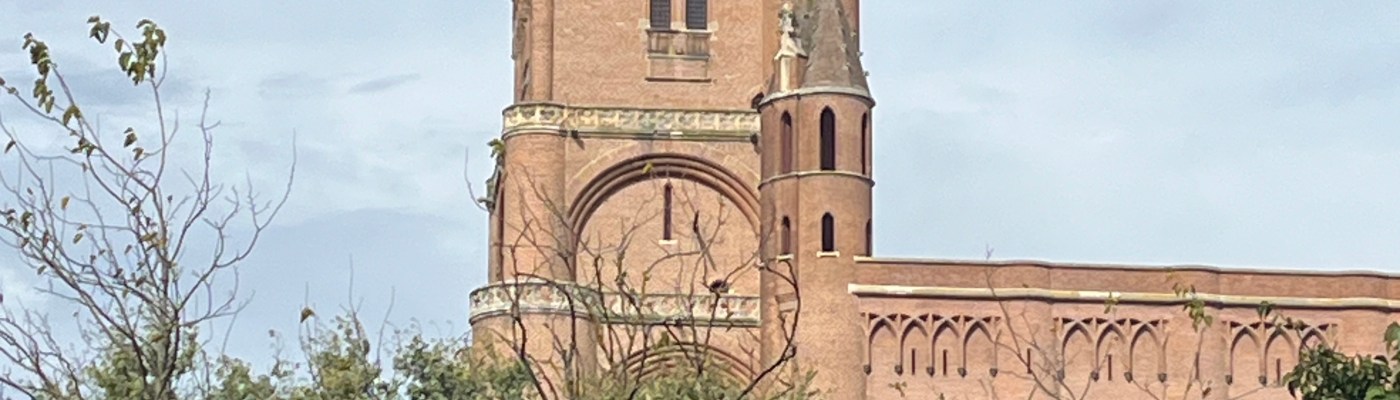
I did not know a great deal about the town of Albi before my field trip. I had used Google maps to find a city that was in easy train distance from Toulouse for my second field trip out of Toulouse. I found Albi and googled what might be there to visit. I found that it has the largest brick cathedral in the world and that there was a museum dedicated to Toulouse-Lautrec. This seemed an ideal field trip.
I got up and hopped the local train that headed to Albi. The trip was just over an hour and headed out through mostly rural farm land. It seems like the line might also be a commuting line for people who want to live further out in the country and commute to Toulouse for work or where people have country weekend houses – especially the first couple of stops. It was an easy and nice train ride.
The historic town center is about a 15 minutes walk from the train station. It was an easy walk and was easy to find the old town as the cathedral is on the top of a small hill and visible at all times. I just followed streets that lead to the cathedral. After a quick circuit around the area near the cathedral with a quick stop at the covered market. I am always fascinated by the covered markets wherever I travel and like to see what is on offer. There seemed to be a little more game at the meat and poultry markets my guess is the rural setting of Albi makes the items easier to obtain.
I visited the the Toulouse-Lautrec musuem. It is in the Palace of Berbie which is the old Bishop Palace. Albi was a center of Catholic power in the area and was the seat of a bishop. From looking at different information, there were two Cardinals that were also Bishops/Archbishops of Albi. The palace had been built as a fortress as well as a palace as this area France was the center of what is Albigensian Crusade that was held in the early 1200s to eradicate the Cathar heresy which was opposed to materialism in the church and Gnosticism. After the crusade, the church wanted to create a show of power and influence and so they built the Palace of Berbie. It is both opulent and a fortress. During the French Revolution, the government seized all religious property and so the Palace became government property. After the restoration of the monarchy and other governments, the palace became a museum.
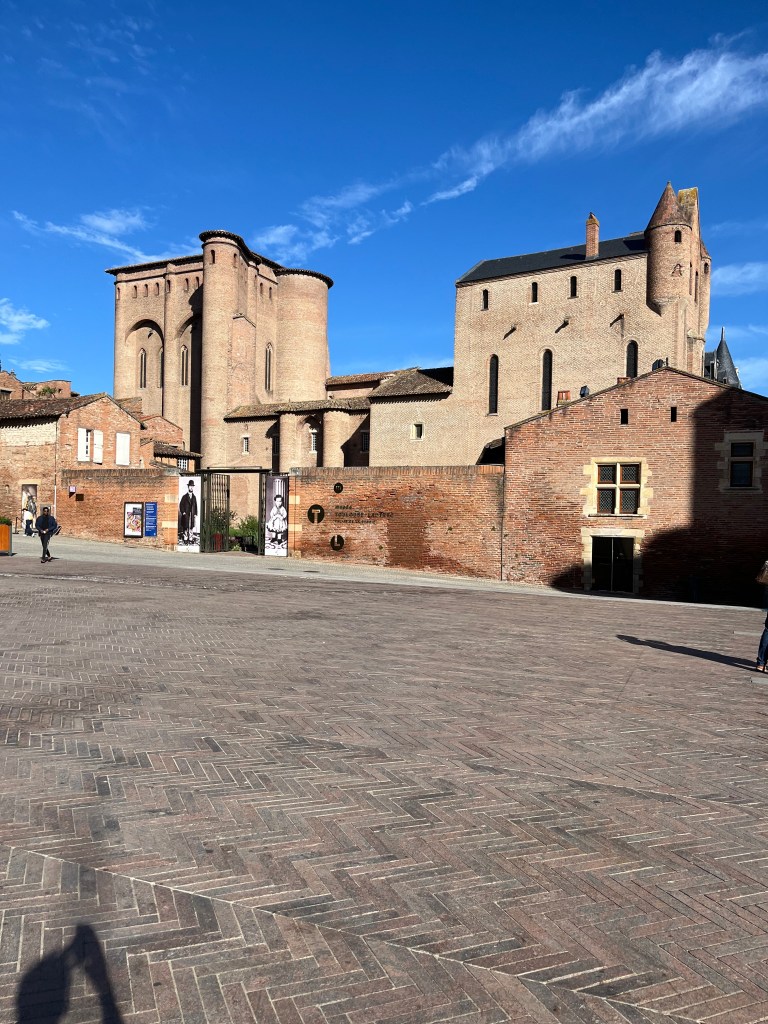
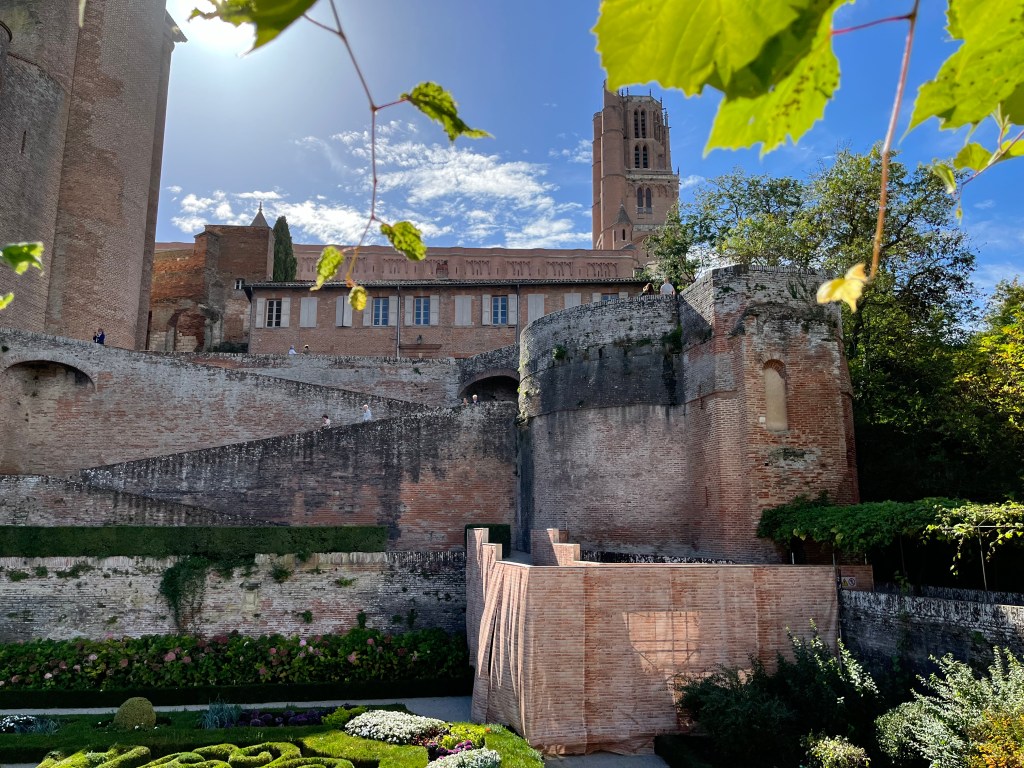
In 1922, the Toulouse-Lautrec family donated the art that they owned to the Palace of Berbie to create a museum dedicated to Toulouse-Lautrec’s art. It holds then single largest collection of the artist’s work. The museum has since collected art from contemporaries of Toulouse-Lautrec so there is a Matisse, a number of Bonnard’s work and other French impressionist and post-impressionist works. It has come to include renovated rooms of the palace and artifacts for the earlier use and existence of the palace. It is a very interesting and informative museum. It is not huge so it is easy to visit all the exhibits in a reasonable time.
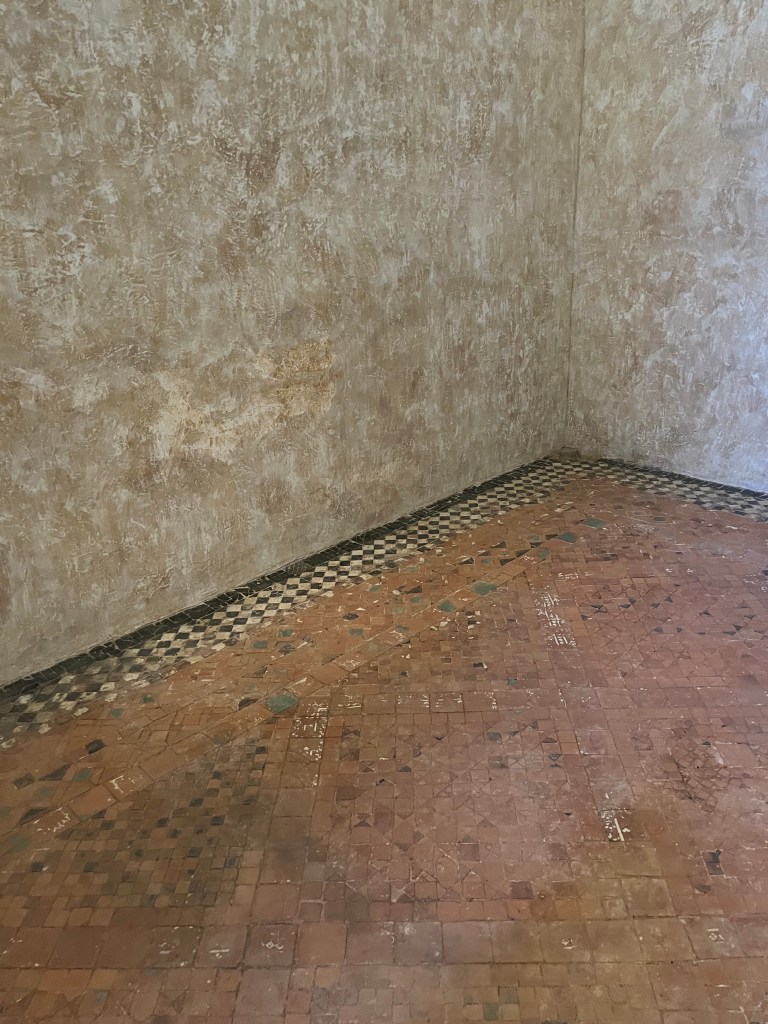
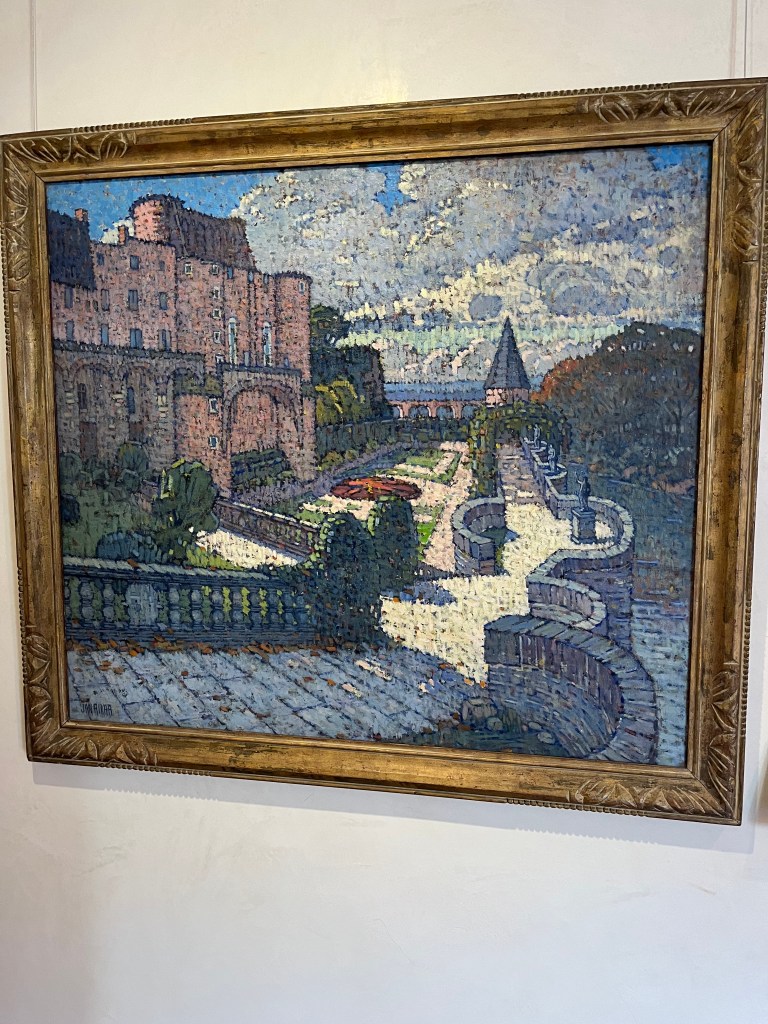
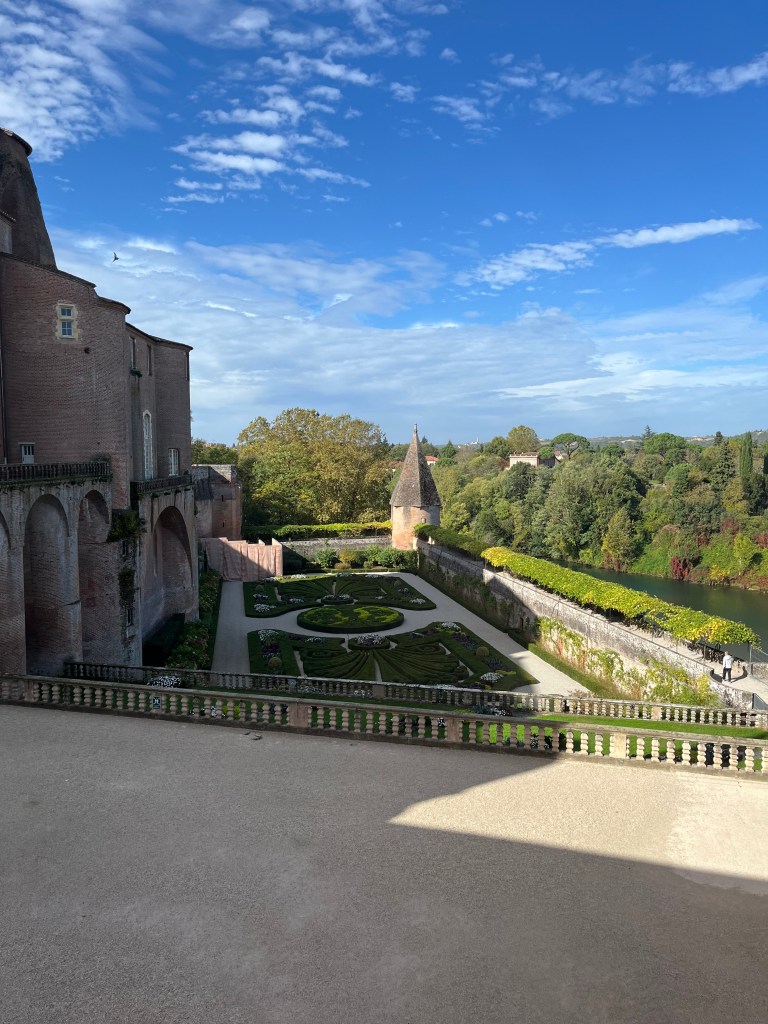
There is a lovely French garden (parterre) that is part of the palace. I found a painting of the garden painted by Toulouse-Lautrec and could look out one of the windows and see a similar scene. It is pretty interesting to see the painting and the actual inspiration at the same time.
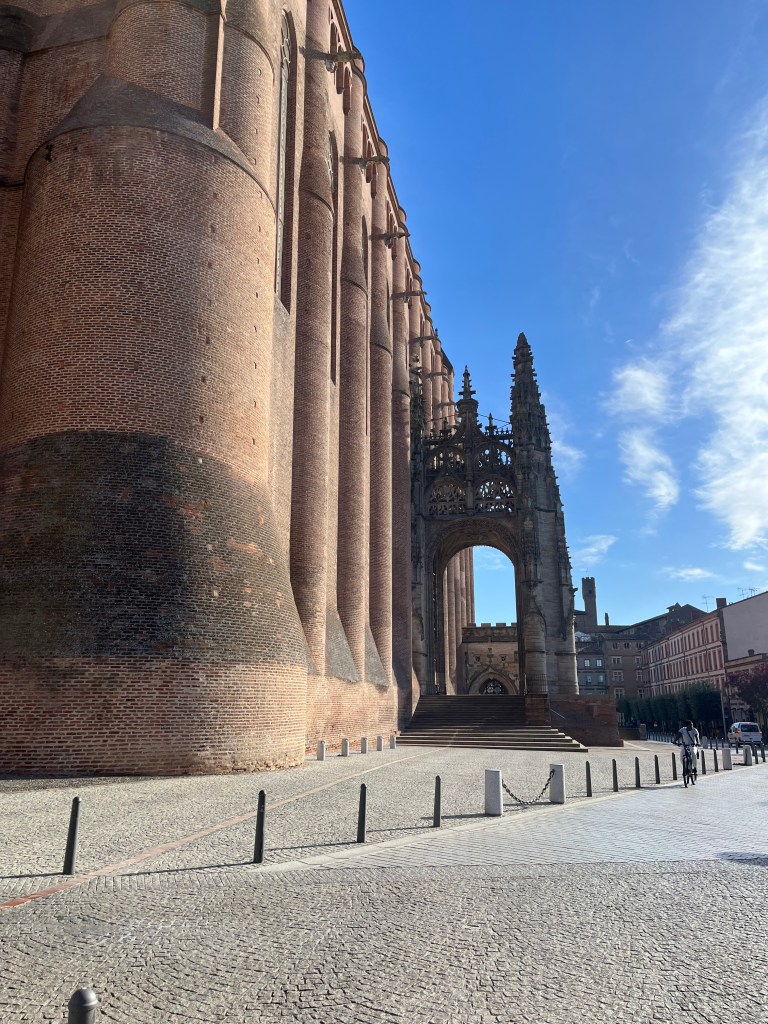
After a nice lunch at a cafe in the square looking at the palace and the cathedral, I visited the cathedral. As stated earlier, it is the largest brick cathedral in the world. It is very austere from the outside except for the south entrance with is a carved screen-like portico. There is very little stained glass and the whole facade is impressive and fortress like. This was deliberate as when the cathedral was originally built, it was part of the process of subduing Albi as the center of the Cathar heresy and wanted to project power.

Inside the cathedral is the exact opposite, it is very opulently decorated and is somewhat overwhelming in the colors and decorations. It isn’t stunning in its size and all the bays and chapels that surround the nave.
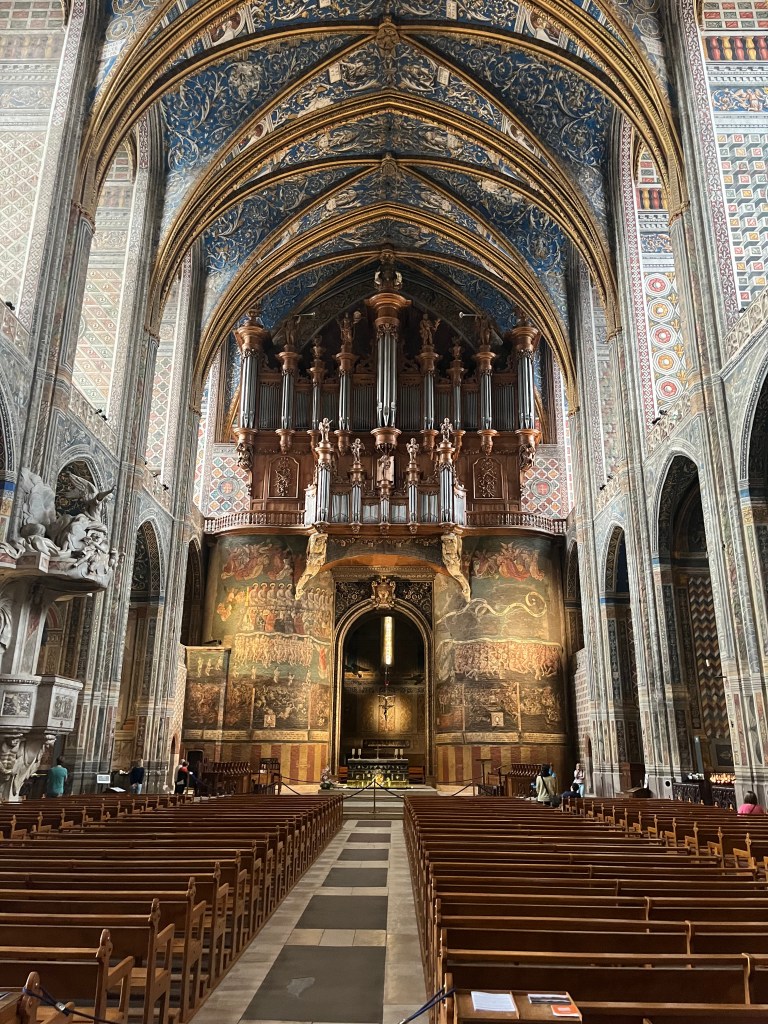
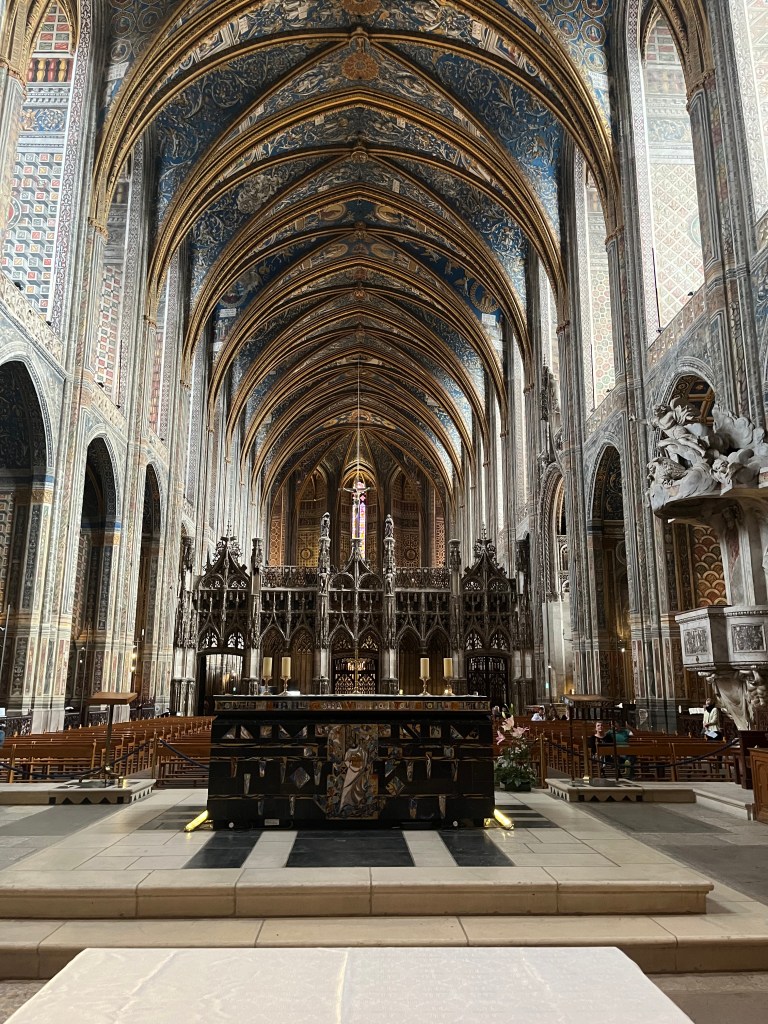
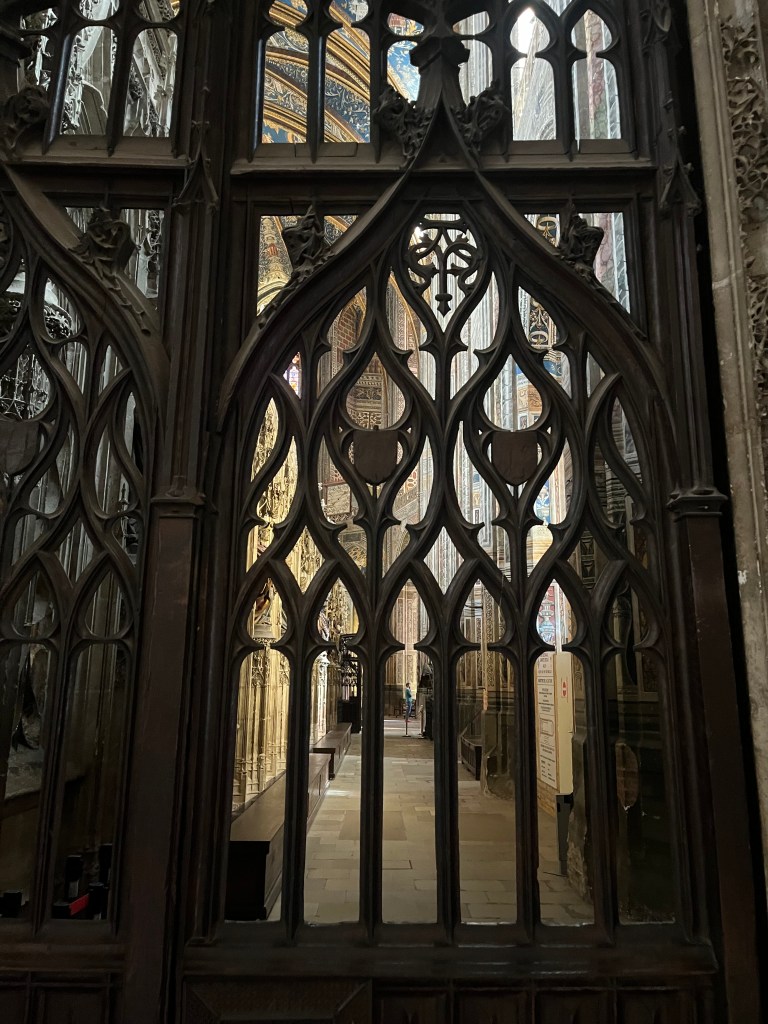
The cathedral also has the only remaining rood screen in a French cathedral. The rood screen in the 14-16th centuries divided the nave (where the general congregation sat and the choir where the clergy and choir sat during a service. It is almost as if there are two sections of the cathedral. In most cathedrals (and churches) the design is east to west with the alter in the east facing the rising sun. Because of the rood screen and enclosed choir, the current alter is in the west because the choir does not have seating for a general congregation. It makes for an interesting layout as there are two alters in the cathedral.
After a fun day in Albi (might have to make a second trip as there was more to see), I caught the train back to Toulouse. I went to my favorite wine bar and had a glass of Languedoc wine. This is the area around Albi and this area of southern France. For the final part, I had dinner at an outdoor bistro (the weather is still quite warm and beautiful), and had the local Toulousian sausage. Both meals today had French fries (frites) as sides. I am learning to each more starches – bread and frites..
 Peter's Next Chapter